By the Numbers
The CITL had a busy 2024-25 academic year, and we are well on our way to meeting our goal of a 10% increase in the percentage of IUB faculty members using our services. Here are some high-level views of our work:
- 7,004 engagements with 1,643 unique clients (this is inclusive of all consultations, event participation, and other substantive contacts with clients)
- 1,281 individual consultations for 490 clients
- 103 events for 2,100 participants (this includes CITL-initiated events and partner events with UITS and other groups)
Faculty by Rank
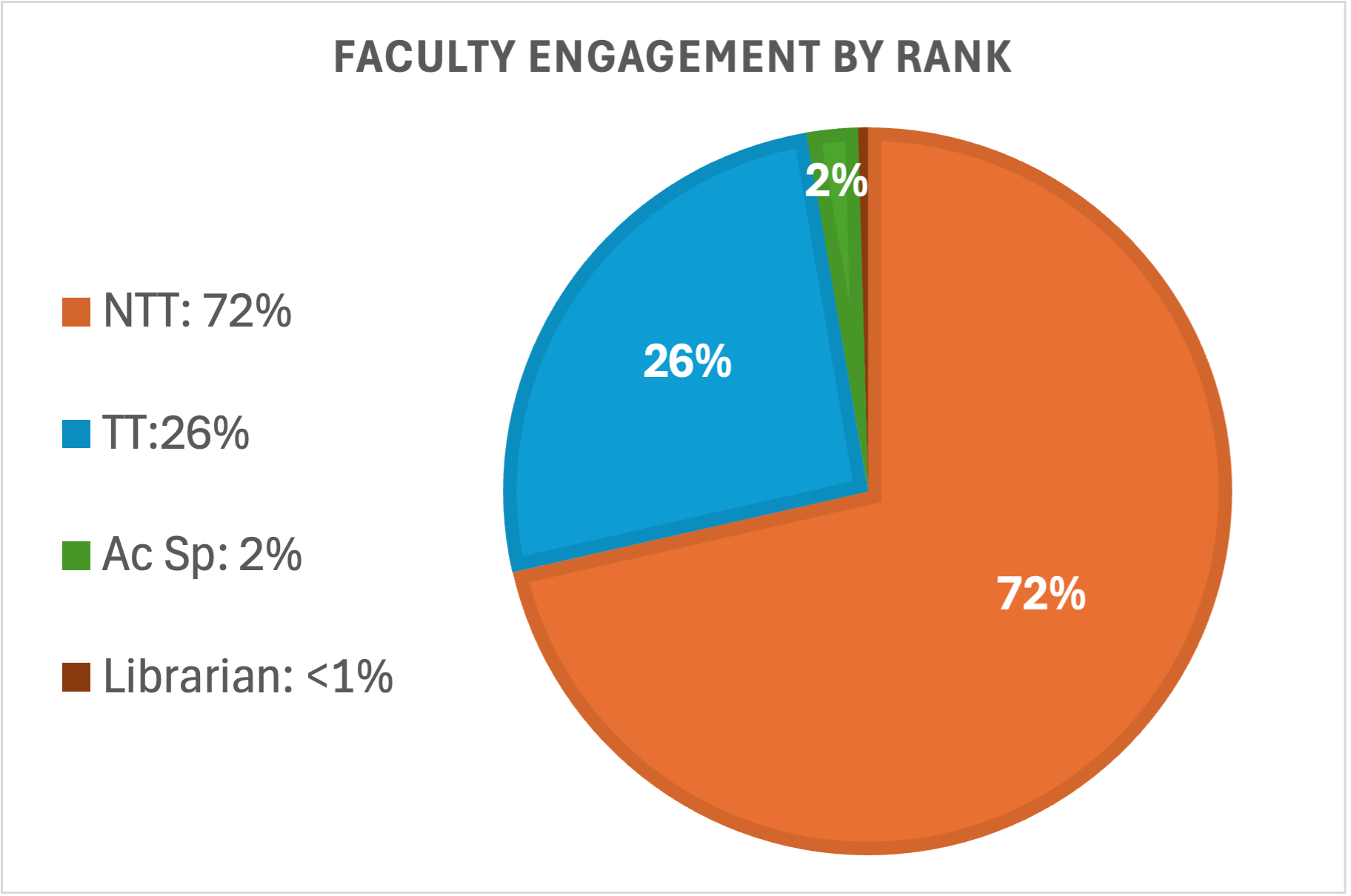
We serve clients with a variety of roles—faculty of all ranks, associate instructors who work with our undergraduates, and staff who support teaching and student success. Here is a breakdown of our faculty clients in 2024-25, showing that the 72% of our faculty clients were non-tenure track (lecturers, teaching professors, clinical faculty, professors of practice, visitors, etc.), followed by 26% who were tenure-track, 2% academic specialists, and a small number of librarians. While these proportions make sense in some ways, given core responsibities, we are considering ways to increase our engagement with tenure-track faculty.
Modalities
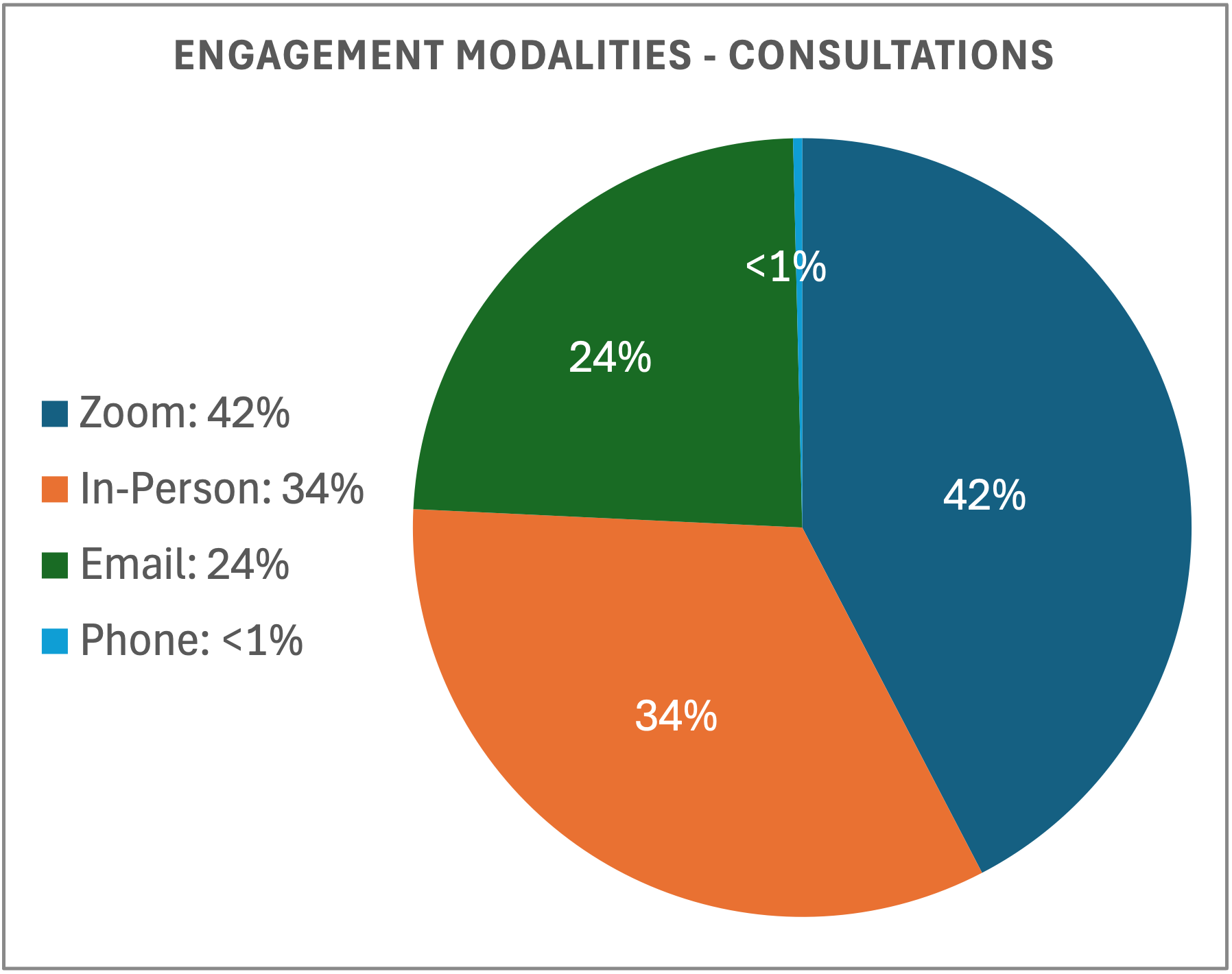
The year we all spent working remotely due to COVID-19 changed the way we engage with our work, and that continues to impact our work with clients. The chart below shows that Zoom continues to be the most frequent modality for consultations at 42% ( likely a result of its convenience), followed by in-person meetings at 34% and email at 24%. (Note: We label email exchanges as consultations when they involve subtantive and repeated emails that address a significant teaching issue, and are equivalent in depth and time to a face-to-face engagement.)
Multiple Engagements
We view multiple visits by an instructor as a marker of deep, transformational engagement (e.g., participation in a multi-session learning community or institute). While we seek to increase the number of total clients, we are careful not to emphasize one-time engagements over deeper ones. Here is a breakdown of the frequency of visits, with numbers tailing off quickly after twenty visits:
| Number of Interactions | Number of Users | | Number of Interactions | Number of Users |
| 1 | 691 | | 11 | 19 |
| 2 | 302 | | 12 | 10 |
| 3 | 142 | | 13 | 14 |
| 4 | 113 | | 14 | 7 |
| 5 | 120 | | 15 | 9 |
| 6 | 39 | | 16 | 1 |
| 7 | 33 | | 17 | 6 |
| 8 | 27 | | 18 | 7 |
| 9 | 25 | | 19 | 6 |
| 10 | 30 | | 20 | 3 |
We use data such as these to set goals and assess our work. If you would like to see more data about CITL usage, contact CITL Director, Greg Siering at gsiering@iu.edu.
Instructional Grants
The CITL distributed $93,000 in instructional development grants over the past year, through Active Learning Grants, Summer Writing Teaching Grants, Scholarship of Teaching and Learning (SoTL) Grants, and the Summer Instructional Development Fellowships (SIDF). We are grateful for our school partners who have co-funded the SIDF program and helped us identify institutional priorities for that program: the Kelley School of Business, Eskenazi School of Art, Architecture & Design, the IU School of Medicine, and the College of Arts and Sciences.
Visit our grants page to learn more about each grant and to see examples of both faculty proposals and the outcomes of their grant-funded projects.
Major Initiatives
During the past year, the CITL engaged in several key programs and initiatives, including these highlights:
Supporting Active Learning through Course Development
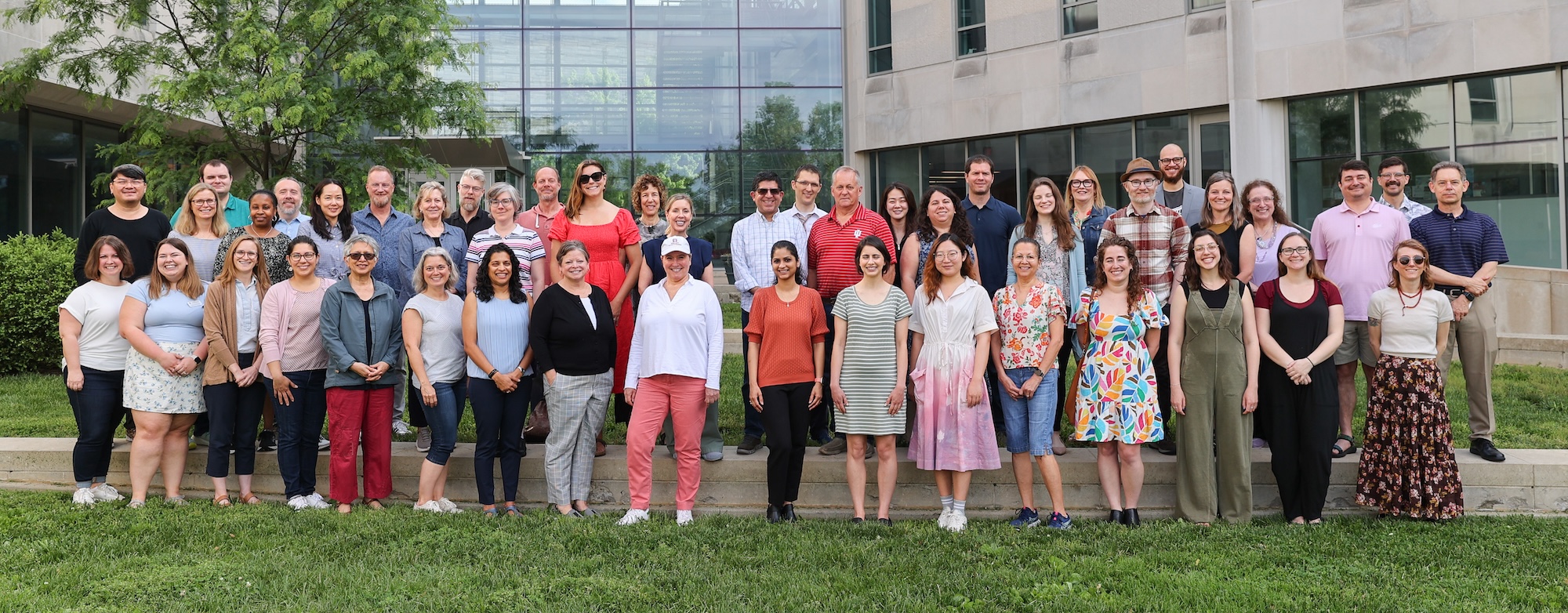
The Course Development Institute has been a signature program of the CITL for over 20 years, supporting IUB instructors who want to (re)build a course from the ground up. CDI is often used to support other initiatives and campus goals around teaching and learning. This spring, we welcomed 40 participants to our Course Development Institute for Active Learning, a variation of CDI designed to help instructors integrate active learning deeply into their course design and learning activities. We are grateful to Provost Shrivastav for supporting CDI-AL as part of his commitment to enhancing the use of active learning at IUB.
Faculty-Initiated Programs
Our best work comes through collaborations with faculty members. Those partnerships in the past year have led to three current projects in the CITL.
Minimizing Distraction and Cultivating Attention: Conversations with instructors revealed their students increasingly struggle with being distracted while attending class or studying. In response, we hosted a summer reading group on James Lang's Distracted: Why Students Can't Focus and What You Can Do about It, and the participants in that group are helping us plan additional workshops in the fall semester on the topic.
Reading Comprehension: Another challenge instructors report facing is decreased reading comprehension—perhaps as a combination of distractions and lingering learning gaps that resulted from COVID shutdowns. After working with faculty and staff colleagues on this issue, we are offering workshops this fall to help instructors develop strategies for enhancing students reading skills.
Support for Teaching Teams: Coming out of our work in the Crimson Course Transformation Initiative, we realized our support often focused on lead faculty members, when their entire teaching teams—including TAs and undergraduate TAs—needed coordinated support. Extensive observations of discussion sections, along with conversations with faculty colleagues, have helped us develop enhanced training for teaching teams, particularly around developing student problem-solving skills.
ISSOTL24 Host
 On October 28-31, the CITL hosted the Scholarship of Teaching and Learning Conference in French Lick. This international conference brought in 413 participants 21 countries (including 85 IU participants) to share their research into teaching and learning. IU hosted the inaugural ISSOTL conference in 2004 and played a founding role in this international organization. Learn more about our ISSOTL history here.